The Parliamentary Assembley in its latest resolution, regarding the rule of law in Bosnia and Herzegovina, noticed “progress made in the field of judicial reform” but also some remaining problems that are “the poor material working conditions of the courts and the lack of consistency in judicial practice as between the entities.”
The Assembly welcomed the work of the War Crimes Chamber of the State Court in prosecuting war crimes, “while regretting the fact that in consistencies still exist in the application of criminal law by various courts at a State and Entity level with respect to war crimes, which leads to inequality in the treatment of citizens, in light of the European Convention on Human Rights(ECHR)”.
In Bosnia and Herzegovina currently five criminal codes are in place, one at the state level, two different ones at entity levels, the criminal code of Brcko district and in same cases even the old Yugoslav code is in use.
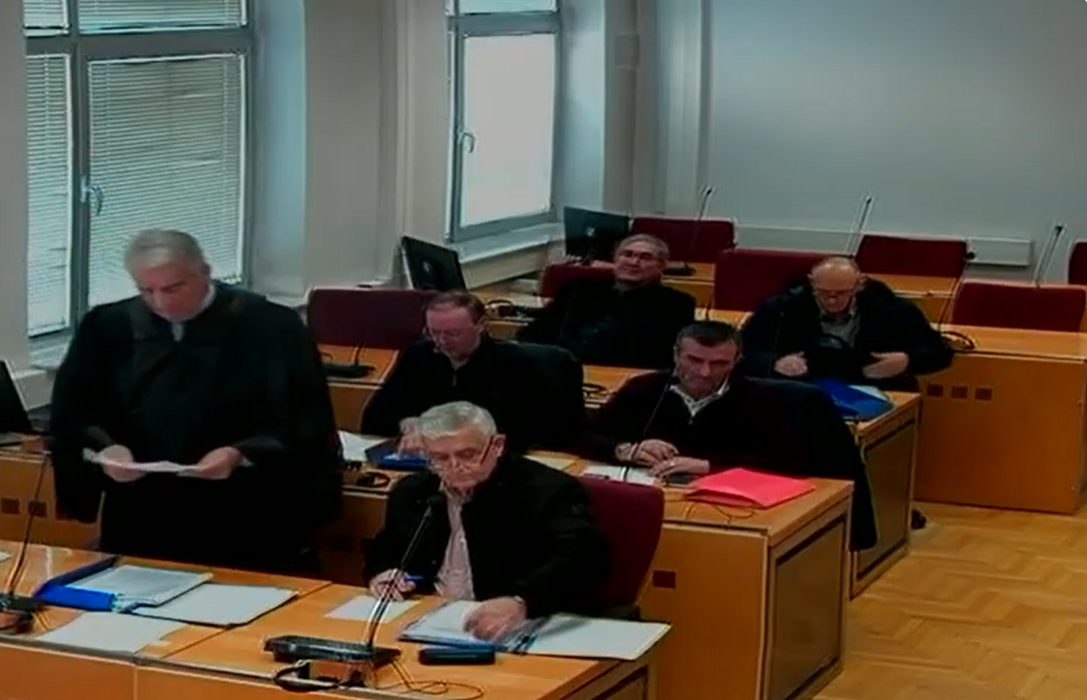
The War Crimes Chamber has been performing work in Sarajevo, as a part of the Court of Bosnia and Herzegovina, since 2004.
The Parliamentary Assembly has called on the authorities of Bosnia and Herzegovina to “further pursue the judicial reform, in particular, by improving the material conditions of courts, strengthening co-operation between judges, prosecutors and the police and promoting better consistency in the judicial practice at Entity and State level, notably by considering the creation of a state level Supreme Court.”
Nevertheless, the Assembly calls on the state to “ensure the uniform application of the Criminal Code of Bosnia and Herzegovina at entity and state levels, in particular with respect to war crime cases and finalise without further delay the strategy to deal with the remaining war crimes cases.”
In the resolution, the Assembly concluded that without proper reforms,”and in the absence of co-operation between the various structures and institutions at the level of the state and the entities, Bosnia and Herzegovina will not be able to make full use of the benefits of European integration.
The Assembly congratulated to the country for signing a key pre-membership deal with the European Union called the Stabilisation and Association Agreement, in June this year, but reminded that lot of has to be done.
“Without fully-fledged constitutional reform, police reform, which was one of the preconditions for the signing of the SAA with the European Union, will be blocked and the recently adopted legislation may become inoperative,”reads the resolution.
“In particular” the Assembly called all the political leaders to”re-launch dialogue about the various reform proposals immediately after the October 2008 local election, in close co-operation with the European Commission for Democracy through Law (Venice Commission), with a view to drafting and adopting a new constitution before October 2010.”
The Assembly also drew attention to the “increase in nationalist and ethnic rhetoric,” ahead of the October 2008 local elections which are due to be held on Sunday.
The same resolution condemned “the discrimination and violence against” against organisers and participants of the Sarajevo Queer Festival and journalists.
Bosnia was accepted as a Council of Europe member on 24 April 2002, while the government was headed by non-nationalist parties, in the only period after the war.
To date, Bosnia and Herzegovina has signed and ratified 64 Council of Europe conventions.